Balloon Master 3D-Puzzle Games
- 4.6
- Rating
- 10.00M
- Installs
- Free
- Price

 Analysis by App-foxy
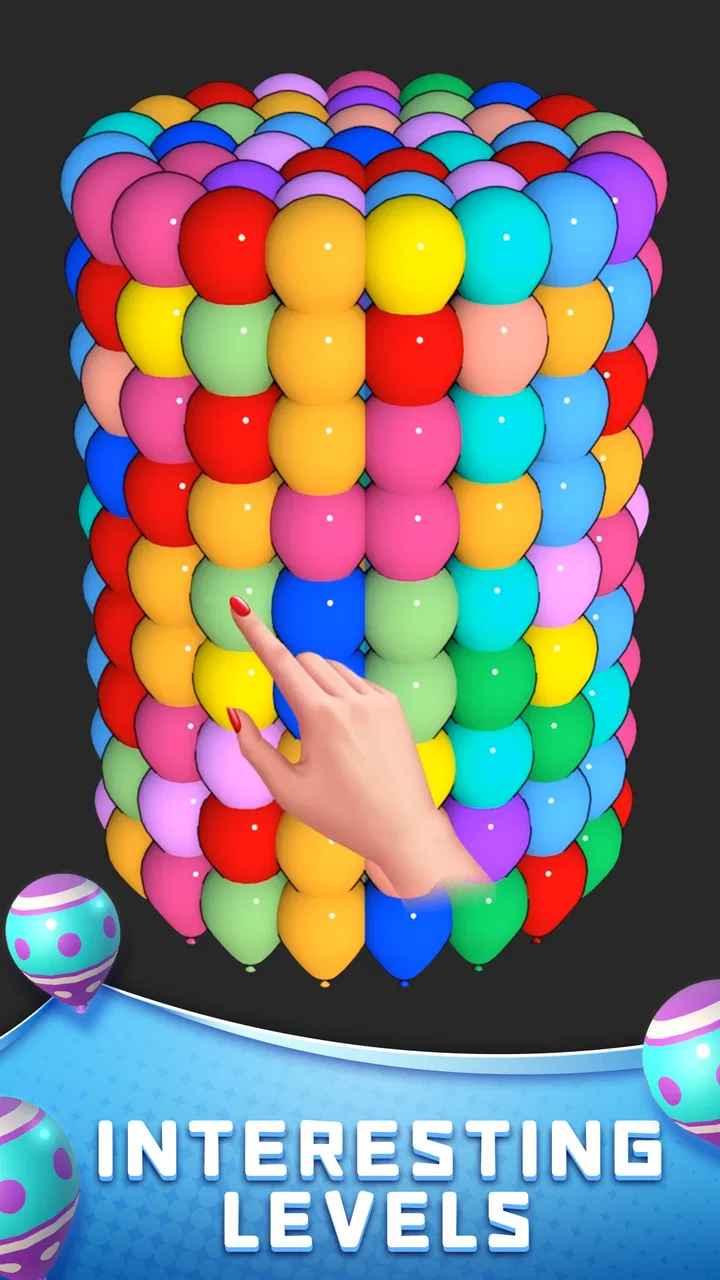
I picked up Balloon Master 3D expecting a simple match-three time filler, and that is exactly where its appeal lies. The game turns colorful balloons into short puzzle tasks: I look for matching groups, tap through the board, watch the pieces clear, and decide whether the next move is worth taking immediately or saving for a better chain. It is easy to understand within moments, but the small decisions become more interesting when the board starts to tighten.
Created by Higgs Studio, this free puzzle game is aimed at Everyone and runs on Android devices using version 6.0 or later. It has already passed ten million installs, while its average score sits at 4.6 from roughly eighty-one thousand ratings. Those numbers suggest a broad audience, but they do not tell me whether it will suit every player. In my experience, the real question is whether you enjoy a relaxed matching loop more than a demanding strategy puzzle.
How the balloon-matching loop feels in practice
I find the balloon board easiest to enjoy when I treat each clear as a chance to reassess, not as a signal to tap faster. A brief scan after the pieces settle helps me spot whether the new layout offers a better route than the most obvious match. That habit keeps a short session lightly thoughtful and sets up a closer look at how the game fits into everyday play.
You May Also Like

 Blood Strike: 2.5 Anniversary
Blood Strike’s Loadouts Turn Every Drop Into a Tactical Gamble
A close look at Blood Strike’s custom loadouts: how fast access to signature weapons reshapes its battle royale rhythm, rewards preparation, and narrows the gap between fights.

 Pandora - Music & Podcasts
Pandora’s Music Is Easy to Start, but Harder to Recover
Pandora’s strength is its low-effort path from a seed to a station. Its weak spot is how much confidence it asks you to place in connection, setup, and quiet recovery.

 8 Ball Pool
 Is Built on Rivalries, Rematches, and Routine
A close look at the rivalries, rematches, shared routines, and unanswered safety questions that turn a quick pool match into a persistent mobile community.

 Samsung Music
’s Quiet Strength Is Playing What You Already Own
Its reach comes less from spectacle than from dependable access to a personal library. That simplicity is both the app’s strongest retention engine and its ceiling.

 AccuWeather: Weather Radar
AccuWeather Review: A Quick, Clear Forecast for Everyday Decisions
For everyday plans, the best forecast is the one you can understand quickly. AccuWeather makes rain timing, radar, and local conditions easy to act on, with a few trade-offs.

 Hill Climb Racing
Why Hill Climb Racing Still Turns Crashes Into One More Run
A tiny car, a bumpy hill and one more upgrade: Hill Climb Racing keeps resurfacing because its simple chaos makes every near-miss feel personal.
More From Our News Desk



The first action is simple, but the board invites planning
The opening move is deliberately approachable. I scan the balloon layout, identify a matching opportunity, and tap it. The visual response is immediate: the selected balloons disappear, the remaining pieces shift into the open space, and the board presents a new arrangement. That sequence gives the game its basic personality. I am never waiting long to see whether an action mattered.
What makes the first tap more than a random click is the need to read what will happen afterward. A group that looks attractive may leave awkward gaps, while a less obvious match can open a better route through the board. I found myself checking the surrounding balloons before committing, especially when several possible moves were available. The game remains casual, but it rewards a little attention rather than pure tapping.
This is also where the three-dimensional presentation helps. The balloons have a playful, rounded appearance that makes the board feel lighter than a traditional tile puzzle. I can distinguish colors and groups quickly, which matters when I am playing in a brief break. The presentation is not trying to create a serious strategy atmosphere; it is designed to make each match feel cheerful and readable.
A useful habit is to pause for a second after every clear instead of tapping the first new group I notice. The board changes after a move, so the best follow-up is not always the match that was visible before the pieces settled. That small pause improves my decisions without making the game feel slow. It is one of the easiest ways to get more out of the puzzle without turning it into a study session.
The feedback rhythm keeps each move moving
The strongest part of the experience is the rhythm between action and feedback. I tap, the balloons react, the layout changes, and I immediately have another choice. That compact cycle makes the game comfortable for short sessions because there is little downtime between decisions. Even when a move is not especially clever, the visual clearing effect gives it a satisfying sense of completion.
That rhythm also explains why the game can become absorbing. A single match creates a new board state, and the new state suggests another move. I often begin by intending to play for a minute, then continue because the latest arrangement looks solvable. The reason to keep going is not a complicated story or a large system of controls; it is the curiosity of seeing whether the next tap will produce a cleaner board.
The feedback is most enjoyable when I have deliberately prepared it. If I choose a match that opens space for another group, the result feels earned. When the board clears in a less useful way, the game still moves forward, but I notice the difference. This gives the otherwise gentle format a modest layer of judgment: the game is forgiving in presentation, yet my move order still affects how comfortable the board feels.
Players who prefer quiet, predictable puzzles may appreciate this balance. The game does not ask me to memorize complicated rules before I can enjoy it. On the other hand, people who want deep deduction, elaborate level mechanics, or a long-term competitive challenge may find the feedback loop too light. Its pleasure comes from smooth repetition and small improvements, not from solving a dense logic problem.
Why the reward is the next clean opportunity
The immediate reward is the clearing action itself. Matching balloons produces a visible result, and the board becomes easier to read for a moment. I like that the game does not require me to wait for a long sequence before acknowledging progress. Each successful action has its own payoff, which makes even a modest move feel worthwhile.
There is also a secondary reward in creating a better starting point for the next move. A careful match can reduce clutter and expose combinations that were previously hidden by the arrangement. This is where the game becomes more than a color-tapping exercise. I am not only asking which group can disappear now; I am also considering which move leaves the most useful board afterward.
For everyday use, that makes it a good companion during a commute, a short rest, or the few minutes before an appointment. I can stop after a small amount of progress without feeling that I abandoned a complicated campaign. The game is also suitable for players who want a gentle activity that occupies the hands while keeping the mind lightly engaged.
Its free entry point makes trying it straightforward, although optional purchases range from forty-nine cents to nearly one hundred dollars per item. That broad range is worth keeping in mind before spending. I would approach the purchase options cautiously and decide whether they genuinely improve my enjoyment rather than treating them as part of the core puzzle. The basic attraction of the game is already present in the matching loop itself.
Another practical point is that the Everyone rating makes the tone broadly accessible. I would still judge the experience by the player’s tolerance for repetition. A younger or casual player may enjoy the bright balloon theme, while an experienced puzzle fan could want more variation than the central matching action provides. The age rating describes accessibility, not depth, and those are different qualities.
Resetting the session without losing the appeal
Every puzzle session eventually reaches a point where the current arrangement is finished or no longer interesting. The reset is important because it determines whether I want to begin again. In this game, starting another round feels natural because the basic setup is quick to understand. I do not need to relearn a complex ruleset before returning to the board.
The reset also changes the mental task. I am not simply repeating the exact same sequence; I am looking at a fresh collection of balloons and rebuilding a plan. That gives the game its replay value. The motivation for another session is usually modest but effective: I want to see a cleaner run, make fewer careless matches, or handle the next board with better timing.
This design works particularly well when I have an unpredictable schedule. If I am interrupted, the game does not demand the kind of sustained attention I would give to a story-driven adventure. I can treat a session as a small mental break rather than a major commitment. For that reason, I think the game is better suited to frequent short visits than to a long evening of uninterrupted play.
There is a trade-off, though. Because the loop is so focused, the reset may eventually feel familiar rather than exciting. Players who need new environments, characters, or steadily changing puzzle rules could lose interest sooner. Compared with a richer match-three game that layers in missions, collectibles, or a map, this title feels more direct and less ambitious. That simplicity is either its main strength or its main limitation, depending on what I expect from a puzzle game.
I would skip it if my priority were competitive ranking, elaborate planning across many stages, or a strong narrative reason to continue. I would also look elsewhere if I dislike games built around repeated visual matching. The balloon theme makes the experience friendly, but it does not transform the fundamental structure. Someone seeking a pure logic challenge may be happier with a number puzzle, a word game, or a grid-based strategy title.
Where it sits beside other match-three games
Compared with the usual match-three alternatives, Balloon Master 3D feels less concerned with building a large game world around the puzzle. Many games in this category surround matching with characters, quests, timed events, or resource systems. Here, the balloon board remains the center of attention. That makes it easier to start and easier to leave, but it also means there are fewer layers competing for attention.
I prefer this focused approach when I want a quick distraction. I can concentrate on the board instead of managing several currencies or following a long progression path. The visual language is also less intense than games that rely on constant effects and elaborate objectives. For a player who wants a calm, recognizable puzzle routine, that restraint can be refreshing.
The compromise is that the game may not provide the same sense of long-term development as its more elaborate competitors. A player who enjoys unlocking new tools or building toward a major goal may find the repeated balloon-clearing action too narrow. In my view, this is not a weakness that needs to be hidden; it is the central choice the game makes. It offers a small, repeatable activity rather than a broad entertainment package.
The 3D balloon treatment gives it a distinct feel within that familiar category, but the core skill remains board reading and move selection. I would recommend it to someone who likes matching games but wants less pressure and less surrounding clutter. I would recommend a more feature-heavy alternative to someone who measures value by the amount of content, progression, or strategic variety outside the board itself.
Small techniques that make the experience better
My first practical tip is to scan the entire layout before tapping. The most visible group is not automatically the best one, and a quick overview helps me notice whether another match can open more space. This is especially useful when the board offers several similarly attractive choices.
Second, I try to think one move beyond the match I am making. I ask what the board will look like after the balloons disappear and settle. That habit turns the game from a reflex exercise into a light planning puzzle. It also reduces the frustration of using a promising group too early and leaving a less flexible arrangement behind.
Third, I use the game as a deliberate reset between demanding tasks rather than letting it become an automatic distraction. A short round works well after reading, studying, or handling repetitive work because the matching action gives my attention a different shape. If I continue playing only because I am avoiding another task, however, the loop can become background tapping instead of a genuinely refreshing break.
Finally, I would avoid judging the game after only a few careless moves. Its enjoyment depends on noticing how the board changes, and that is easier when I slow down slightly. The game is casual, but casual does not have to mean thoughtless. A measured pace reveals more of the puzzle’s small decisions without adding unnecessary complexity.
Device fit, accessibility, and everyday expectations
The Android requirement is modest enough to include older compatible devices, with the current release listed as version 1.8.10. That makes it a practical candidate for someone who does not use a recent phone. I would still keep expectations realistic: compatibility does not guarantee that every device will feel equally comfortable, especially when a game’s visual presentation depends on a clear screen and responsive touch input.
The game’s free price lowers the barrier to testing it for yourself. I would install it when I wanted a low-commitment puzzle rather than deciding in advance that it would become a long-term favorite. The optional purchase range means I would also keep an eye on accidental spending, particularly if the device is shared with younger players. The game’s accessible tone makes that consideration more relevant than it might be in a niche strategy title.
For a family setting, the Everyone rating and straightforward controls make the game easy to explain. One person can show the basic matching action, and the other player can begin experimenting almost immediately. The main difference between players will be patience and interest in planning, not the difficulty of understanding the interface.
For adults, I see the strongest use case in short, repeatable breaks. It is not the game I would choose when I want to become deeply immersed in a world, but it is a reasonable choice when I want a colorful board and a clear objective. That distinction helps avoid disappointment: the game is a small puzzle habit, not a replacement for a full-length adventure or a demanding brain-training program.
My verdict on the complete action-feedback-reward-reset loop
Balloon Master 3D succeeds because its loop is easy to feel. I make a match, receive immediate visual feedback, enjoy the small reward of clearing space, and then get a new arrangement that gives me a reason to continue. When the session ends, restarting is painless, so another round feels available rather than burdensome.
My honest reservation is that the same focused design can become repetitive for players who need constant novelty. The game does not need to apologize for being simple, but I would not present it as a deep strategic experience. Its best qualities are accessibility, quick feedback, and the satisfaction of making a slightly better move on the next board.
I recommend it for casual puzzle players who want a friendly balloon-matching game that fits into spare minutes. I would be more cautious about recommending it to someone who wants a story, competition, complex objectives, or a large progression system. For me, it works when I treat it as a compact mental break: one board, a few thoughtful taps, a visible result, and the option to start again whenever the next small challenge sounds appealing.
FAQs for Balloon Master 3D-Puzzle Games
01What is Balloon Master 3D-Puzzle Games about?
Balloon Master 3D-Puzzle Games is a captivating puzzle game where players must strategically pop balloons in a 3D environment. The game challenges your problem-solving skills with increasingly complex levels that require precision and planning. It's designed to be both entertaining and mentally stimulating, suitable for players of all ages.
02Is Balloon Master 3D-Puzzle Games free to play?
Yes, Balloon Master 3D-Puzzle Games is free to download and play. However, it does offer in-app purchases that can enhance your gaming experience. These purchases are optional and can provide additional features, such as special power-ups or ad-free gameplay. Be sure to check your device settings to manage these options.
03What are the system requirements for Balloon Master 3D-Puzzle Games?
For Android users, Balloon Master 3D-Puzzle Games requires Android version 5.0 or higher. iOS users need iOS 10.0 or later. The game is optimized for most modern smartphones and tablets, but ensure you have adequate storage space and a stable internet connection for the best experience.
04Does Balloon Master 3D-Puzzle Games have multiplayer options?
Currently, Balloon Master 3D-Puzzle Games is designed as a single-player experience. It focuses on individual puzzle-solving skills and progression through levels. However, the developers are considering future updates that might include social features or competitive elements to enhance player interaction.
05How does Balloon Master 3D-Puzzle Games handle data privacy?
Balloon Master 3D-Puzzle Games takes user privacy seriously. It collects minimal data necessary for gameplay, primarily for saving progress and in-app purchase management. The app complies with standard data protection regulations, ensuring that your information is safe and not shared with third parties without consent. Always review the app's privacy policy for detailed information.
Pros
- Engaging 3D graphics enhance gameplay.
- Intuitive controls for easy navigation.
- Variety of puzzles keeps it interesting.
- Frequent updates with new levels.
- Offline mode available for travel play.
Cons
- In-app purchases can be pricey.
- Ads may interrupt the flow of the game.
- Some levels feel repetitive.
- Limited customization options.
- Occasional lag on older devices.

Balloon Master 3D-Puzzle Games
Gallery